Home › The Tree
The Kratom Tree
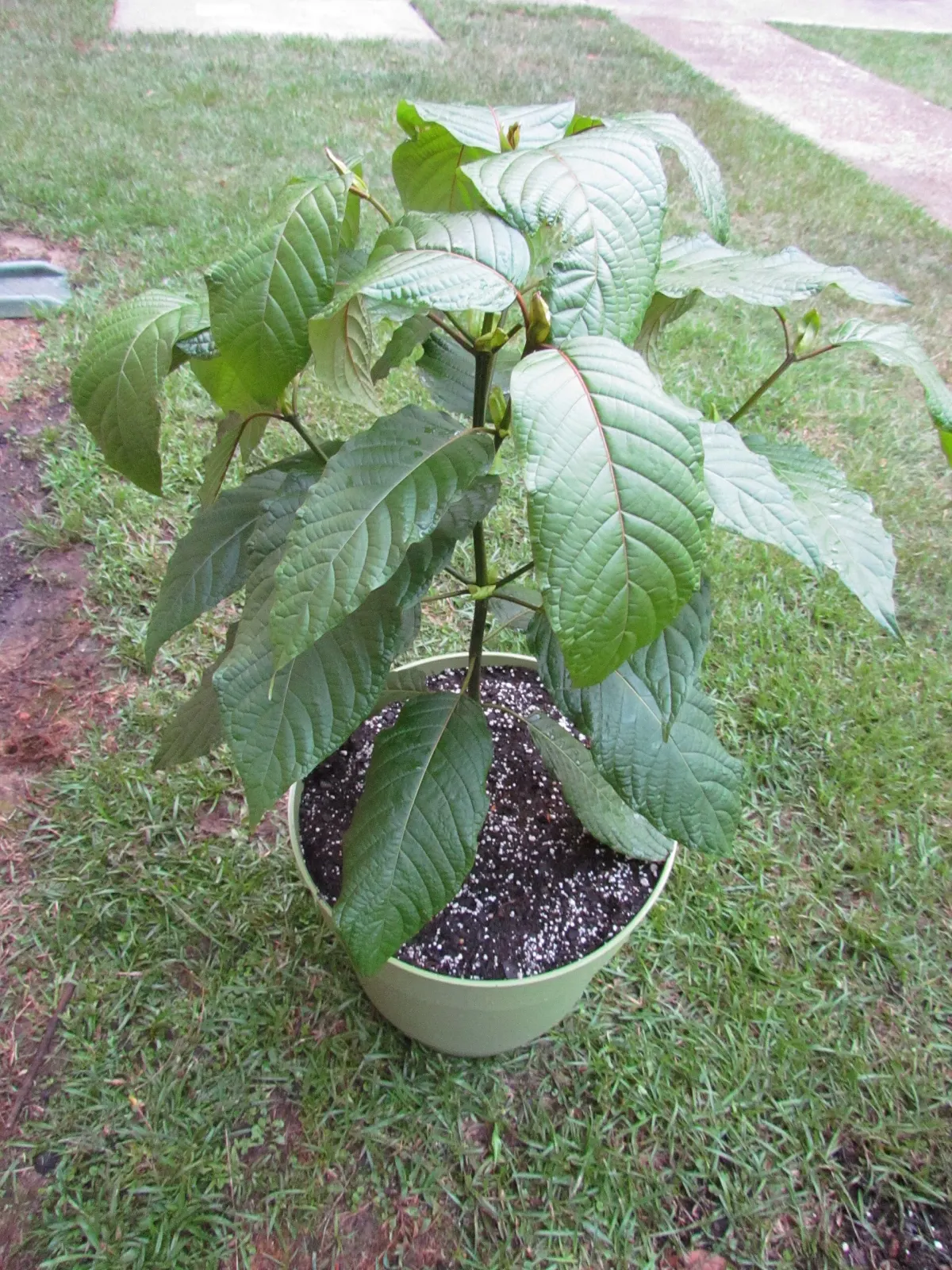
Before kratom is a powder in a bag, it is a tall evergreen tree with big glossy leaves.
Kratom is the common name for Mitragyna speciosa, a tree native to Southeast Asia, per the FDA kratom page. NIDA uses the same word for the tree and for the products made from its leaves, per the National Institute on Drug Abuse kratom page. It belongs to the coffee family, Rubiaceae, which is why botanists group it with coffee and gardenia.
What The Plant Looks Like
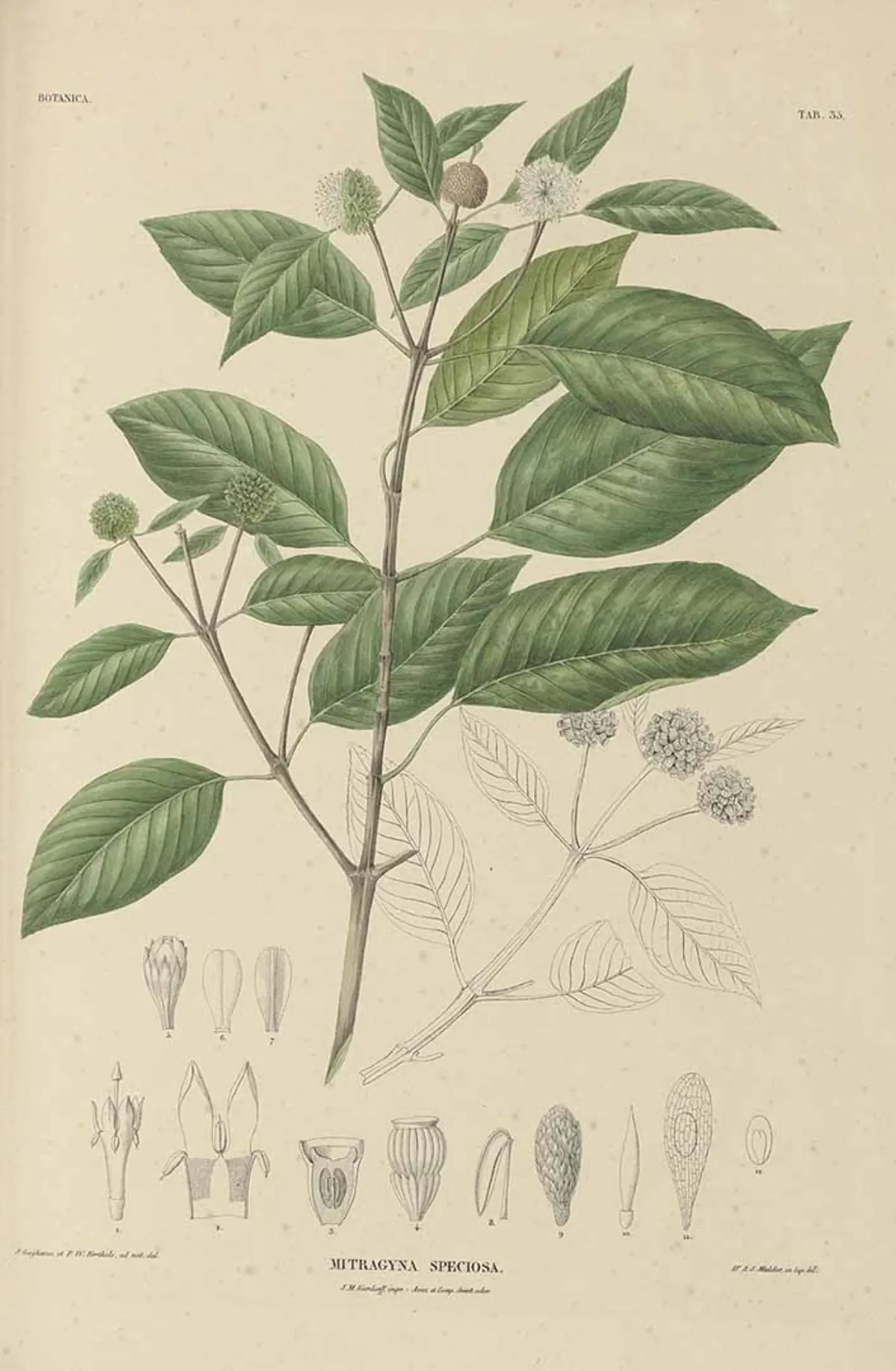
- Leaves. Large, glossy and oval with a pointed tip. The veins can run green or red.
- Flowers. Small round yellow heads that look like puffs, growing in clusters.
- Growth. In the wild it grows into a tall tree in wet tropical forest. In a pot it stays a shrub.
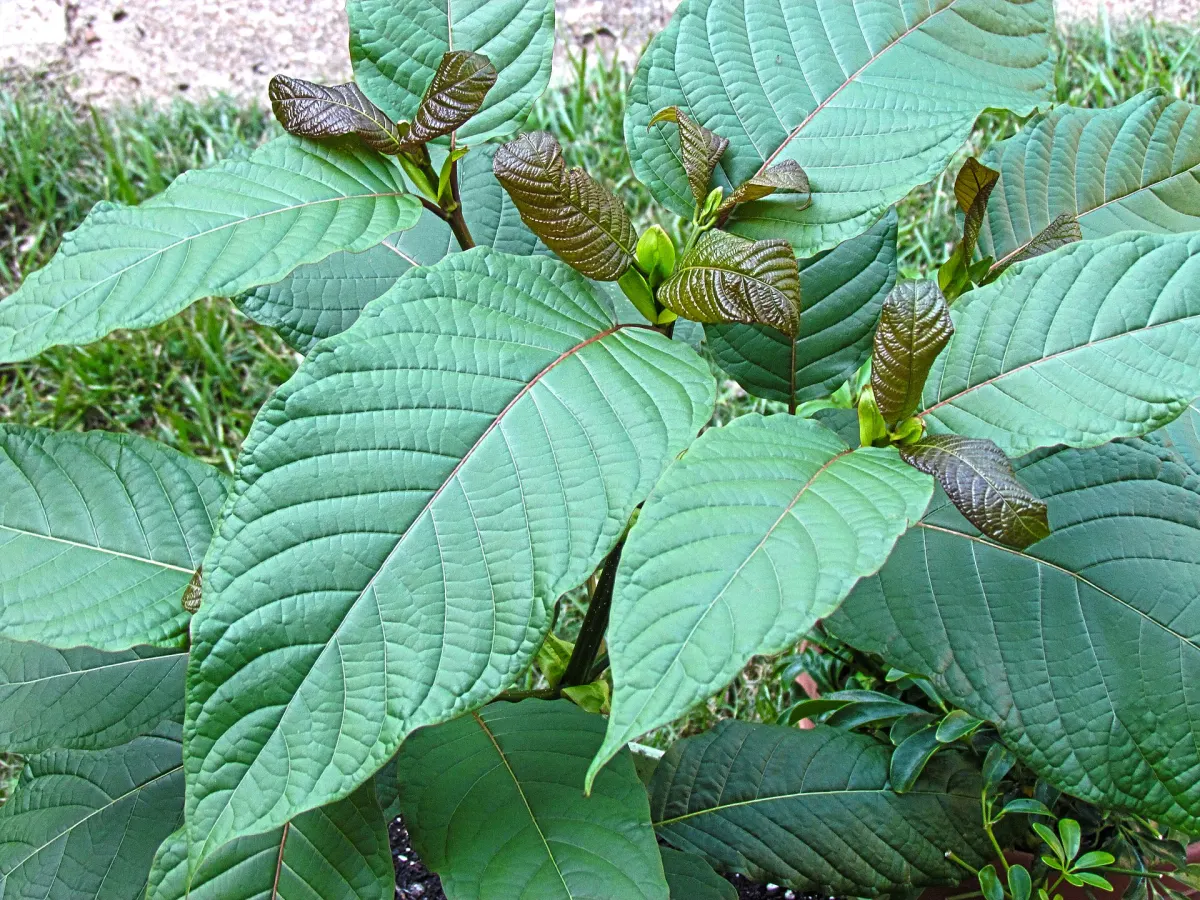
- New growth. Young leaves often unfold with a red or bronze tint before turning green.
From Tree To Bag
- Mature leaves are picked by hand.
- They are dried indoors, outdoors or in a mix of both.
- Dry leaves are crushed, then ground and sifted into a fine powder.
- The powder is packed loose or filled into capsules.
Each step is a chance for dirt, metals or germs to get in. That is why the testing page matters as much as the tree.